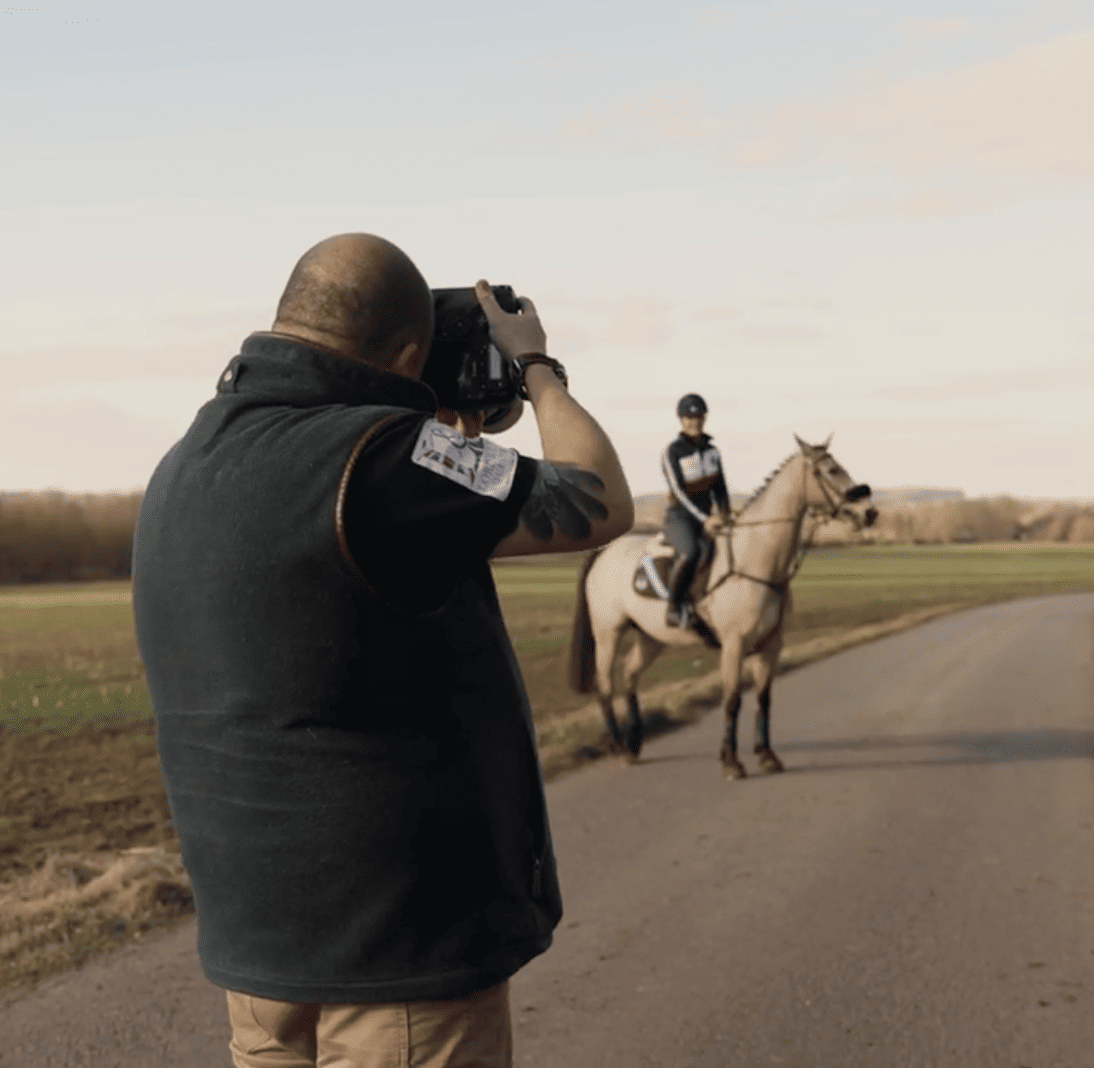
Equestrian sports photography is a unique and exhilarating genre that captures the grace, power, and harmony between horse and rider. To capture these dynamic moments with precision and creativity, a photographer needs the right set of lenses in their arsenal. In this blog, we’ll explore the three essential lenses that every equestrian sports photographer should consider owning.
– Nick Rosendale,Founder | Events Through a Lens
Equestrian sports photography is a unique and exhilarating genre that captures the grace, power, and harmony between horse and rider. To capture these dynamic moments with precision and creativity, a photographer needs the right set of lenses in their arsenal. In this blog, we’ll explore the three essential lenses that every equestrian sports photographer should consider owning.
– Nick Rosendale,Founder | Events Through a Lens
1.
Telephoto Lens (70-200mm or 300mm)
A telephoto lens is a must-have for equestrian sports photography due to the distance often required between the photographer and the subject.
The versatile 70-200mm or 300mm range allows you to capture close-ups of riders and horses in action, even from a considerable distance. These lenses provide a narrow field of view, which helps isolate your subjects against the background, creating stunning portraits or action shots.
When shooting events like show jumping or dressage, a telephoto lens lets you emphasise the details – the determination in a rider’s eyes, the horse’s focused expression, or the tension in mid-air jumps. Moreover, the wide aperture on many telephoto lenses enables you to achieve that desirable shallow depth of field, blurring the background and making your subject pop.
Sign up to MEDIA MENTORS to access the rest of this article and many more.
While telephoto lenses are crucial, a wide-angle lens also has its place in equestrian sports photography.
These lenses, particularly in the range of 24-70mm, provide a broader perspective that captures not only the subject but also the surrounding environment. Wide-angle shots are excellent for showing the context of the event, the scale of the venue, and the interactions between riders, trainers, and spectators.
Wide-angle lenses are especially useful for photographing scenes outside the arena, like riders preparing their horses or interacting with their teams. They also add variety to your portfolio by delivering dynamic shots that reveal the grandeur of equestrian events, such as cross-country courses or stadium entrances.
Equestrian sports photography is a unique and exhilarating genre that captures the grace, power, and harmony between horse and rider.
3.
Prime Lens with Wide Aperture (50mm f/1.8 or 85mm f/1.4)
Prime lenses offer exceptional image quality and low-light performance, and a prime lens with a wide aperture is a valuable asset for equestrian sports photography.
A 50mm f/1.8 or 85mm f/1.4 lens is perfect for capturing portraits of riders and their horses with a stunning background bokeh. These lenses excel in low-light conditions, making them ideal for indoor events or early morning/late evening shoots.
Using a prime lens challenges you to work creatively with a fixed focal length, encouraging you to move around and experiment with different angles. These lenses also tend to be lightweight and compact, making them easier to carry and handle during long shooting sessions.
Conclusion
Some final words
Equestrian sports photography demands a combination of versatile lenses to cover the range of shots required in various situations.
Investing in a telephoto lens, a wide-angle lens, and a prime lens with a wide aperture will equip you to capture captivating images that showcase the elegance, intensity, and passion of equestrian sports. Remember, mastering the use of these lenses takes practice, so don’t hesitate to experiment and develop your unique style as an equestrian sports photographer.